
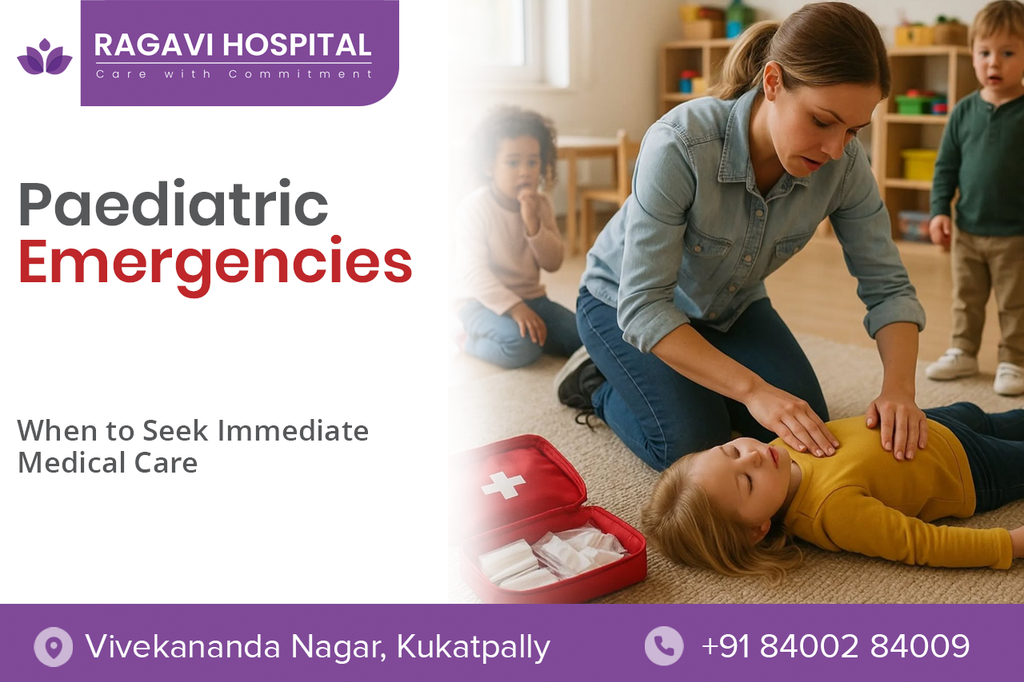
Paediatric Emergencies are medical situations involving infants, children, or teenagers that require immediate medical attention. Children may not always be able to explain their symptoms clearly, and some serious conditions can worsen rapidly. Recognising the warning signs and seeking timely treatment can help prevent complications and protect a child’s health.
From breathing difficulties and severe allergic reactions to high fever, seizures, and accidental injuries, knowing when to visit an emergency department is essential for every parent and caregiver.
What Are Paediatric Emergencies?
Paediatric emergencies are sudden illnesses, injuries, or medical conditions that may threaten a child’s life or cause serious harm without prompt treatment. These emergencies can occur at home, school, during outdoor activities, or anywhere a child spends time.
Some conditions develop suddenly, while others begin with mild symptoms that become more severe. Prompt medical assessment helps doctors identify the cause, stabilise the child, and provide appropriate treatment.
Common paediatric emergencies include:
- Breathing difficulties or choking
- Severe allergic reactions
- Seizures or loss of consciousness
- Serious injuries, falls, or head trauma
- Severe dehydration
- Poisoning or accidental ingestion of harmful substances
- High fever accompanied by concerning symptoms
- Severe abdominal pain
- Significant burns or uncontrolled bleeding
10 Warning Signs That Require Immediate Medical Care
1. Difficulty Breathing
Breathing problems are among the most serious paediatric emergencies. A child who struggles to breathe may have a severe respiratory infection, an asthma attack, an allergic reaction, or an airway obstruction.
Seek emergency care if your child:
- Breathes very rapidly or struggles to take a breath.
- Has bluish or grey lips, tongue, or skin.
- Makes unusual grunting sounds or has severe chest retractions.
- Cannot speak, cry, or drink normally because of breathlessness.
- Suddenly develops choking symptoms.
Call emergency services immediately if your child is struggling to breathe. If choking is suspected, provide age-appropriate first aid only if you know how to do it safely.
2. High Fever With Serious Symptoms
Fever is common in children and often occurs during infections. However, the child’s age, general condition, and accompanying symptoms are more important than the temperature alone.
A temperature of 38°C (100.4°F) or higher in a baby younger than three months requires urgent medical evaluation, even if the baby appears relatively well.
Seek immediate medical attention if fever is accompanied by:
- Unusual drowsiness or difficulty waking.
- A stiff neck or severe headache.
- Difficulty breathing.
- A seizure.
- A rash that does not fade when pressed.
- Signs of severe dehydration.
Do not delay medical assessment in a very young infant or a child who appears seriously unwell.
3. Seizures or Convulsions
Seizures may cause uncontrolled movements, body stiffness, staring, or temporary unresponsiveness. Although some childhood seizures are associated with fever, a seizure should never automatically be assumed to be harmless.
During a seizure:
- Place your child on a safe surface and protect the head.
- Move nearby hard or sharp objects away.
- Do not restrain the child’s movements.
- Never put fingers, food, water, or objects into the child’s mouth.
- Time the seizure and observe what happens.
Call emergency services if the seizure lasts five minutes or longer, the child has difficulty breathing, another seizure begins without recovery, or the child does not regain consciousness. Seek emergency assessment for a first seizure.
4. Severe Allergic Reactions
A severe allergic reaction, known as anaphylaxis, can develop rapidly after exposure to certain foods, medicines, insect stings, or other allergens.
Warning signs include swelling of the tongue or throat, breathing difficulty, sudden dizziness, collapse, or symptoms affecting multiple body systems.
If anaphylaxis is suspected, use the child’s prescribed adrenaline auto-injector immediately, if available, and call emergency services. Do not wait for an antihistamine to work or for symptoms to become worse.
5. Severe Dehydration
Children can lose fluids quickly during vomiting, diarrhoea, fever, or prolonged periods without adequate fluid intake. Severe dehydration can become dangerous, particularly in infants and young children.
Watch for:
- Very little or no urine.
- A dry mouth and tongue.
- Sunken eyes.
- Unusual sleepiness or reduced responsiveness.
- Inability to keep fluids down.
- Cold hands and feet or signs of poor circulation.
Seek immediate medical attention if your child is difficult to wake, appears severely weak, has signs of shock, or cannot drink. For a conscious child who can swallow safely, small, frequent amounts of oral rehydration solution may help while you arrange appropriate care.
6. Serious Head Injuries
Falls, road accidents, and sports injuries can cause head trauma. Some serious injuries may not produce obvious external wounds.
Get urgent medical assessment if your child experiences repeated vomiting after a head injury, a worsening headache, unusual behaviour, confusion, difficulty walking, or excessive drowsiness.
Call emergency services for loss of consciousness, a seizure, difficulty waking, weakness, or other severe neurological symptoms. Avoid moving a child unnecessarily if a serious neck or spinal injury is suspected.
7. Poisoning or Accidental Ingestion
Children may accidentally swallow medicines, cleaning products, chemicals, or other potentially harmful substances. Even a small quantity can be dangerous depending on the substance and the child’s age and weight.
If poisoning is suspected:
- Seek emergency medical advice immediately.
- Keep the product container or packaging for identification.
- Do not induce vomiting.
- Do not give milk, food, or home remedies unless a medical professional instructs you to do so.
If your child collapses, has a seizure, or has difficulty breathing, call emergency services immediately.
8. Severe Abdominal Pain
Mild stomach discomfort is common in childhood, but sudden or severe abdominal pain may indicate a condition that requires urgent treatment.
Warning signs include:
- Severe or worsening abdominal pain.
- A swollen or unusually firm abdomen.
- Persistent vomiting, especially green vomit.
- Blood in vomit or stools.
- Severe pain accompanied by fever or marked weakness.
- Sudden pain or swelling in the groin or testicular area.
Do not ignore persistent or rapidly worsening pain. Prompt medical evaluation can help identify conditions such as appendicitis, intestinal obstruction, or other urgent problems.
9. Uncontrolled Bleeding and Serious Burns
Accidents involving sharp objects, hot liquids, flames, electricity, or chemicals can cause injuries requiring immediate treatment.
For bleeding, apply firm, continuous pressure with a clean cloth or dressing. Call emergency services if bleeding is heavy, does not stop, or the injury appears severe.
For a thermal burn, cool the affected area under cool running water for 20 minutes if possible. Do not apply ice, toothpaste, butter, or other home remedies. Do not pull away clothing stuck to the burn.
Large, deep, chemical, electrical, or facial burns require urgent medical assessment. For chemical exposure, protect yourself from contact with the substance and follow emergency guidance.
10. Unresponsiveness or Sudden Change in Behaviour
A child who suddenly becomes unresponsive, collapses, develops severe confusion, or cannot be awakened needs emergency assistance.
Call emergency services immediately. If the child is not breathing normally, begin CPR if you are trained or follow the emergency dispatcher’s instructions. Do not give anything by mouth to an unconscious child.
When Should You Take a Baby to the Emergency Department?
Babies, particularly newborns and young infants, can become seriously ill without displaying obvious symptoms. Parents should seek prompt medical evaluation if a baby has:
- A temperature of 38°C (100.4°F) or higher when younger than three months.
- Difficulty breathing or pauses in breathing.
- Poor feeding accompanied by unusual sleepiness or weakness.
- Significantly fewer wet nappies than usual.
- Repeated vomiting or green vomit.
- Blue, grey, or unusually pale skin.
- Difficulty waking or an abnormal response to stimulation.
Do not wait for symptoms to worsen when a young infant appears unwell. Babies require a lower threshold for medical assessment because their condition can change quickly.
What Should Parents Do During a Paediatric Emergency?
Knowing how to respond calmly can help keep your child safe until medical assistance arrives.
Follow these essential steps:
- Assess immediate danger: Check whether the child is conscious and breathing normally.
- Call emergency services: In India, dial 112 for emergency assistance when the situation is life-threatening.
- Provide appropriate first aid: Follow the emergency operator’s instructions and use only first-aid measures you can perform safely.
- Avoid unverified home remedies: Do not give medicines or treatments that have not been recommended for the situation.
- Share important information: Tell the medical team when symptoms started, any known allergies, existing conditions, medicines taken, and possible exposure to harmful substances.
- Do not delay care: Avoid waiting for an appointment or attempting to manage severe symptoms at home.
How Can Parents Help Prevent Paediatric Emergencies?
Not every childhood emergency can be prevented, but practical safety measures can reduce many common risks.
- Keep medicines, cleaning products, and chemicals locked away.
- Use appropriate car seats, seat belts, helmets, and safety equipment.
- Supervise children around water, roads, and cooking areas.
- Store hot liquids and sharp objects out of children’s reach.
- Keep prescribed emergency medicines accessible and check expiry dates.
- Maintain recommended childhood vaccinations and routine health check-ups.
- Learn age-appropriate CPR and basic first aid.
- Save emergency contact numbers and know the location of the nearest emergency department.
Prevention, early recognition, and timely medical care work together to improve children’s safety.
Why Timely Paediatric Emergency Care Matters
Children have different medical needs from adults, and emergency treatment must take into account their age, weight, development, and symptoms. Delayed treatment for severe breathing problems, infections, injuries, or dehydration can increase the risk of complications.
A hospital emergency team can assess the child’s condition, provide stabilisation, arrange necessary investigations, and determine whether specialist paediatric treatment or hospital admission is required.
Parents should trust their observations when a child appears significantly different from their usual self. If symptoms are severe, rapidly worsening, or concerning, seek professional medical help rather than relying on online information.
Frequently Asked Questions About Paediatric Emergencies
1. What are the most common paediatric emergencies?
Common paediatric emergencies include breathing difficulties, seizures, severe allergic reactions, dehydration, serious injuries, poisoning, and infections accompanied by warning signs.
2. When should I take my child to the hospital immediately?
Seek immediate medical care if your child has severe breathing difficulty, blue or grey lips, a prolonged seizure, unresponsiveness, suspected poisoning, severe bleeding, or other rapidly worsening symptoms. A baby younger than three months with a temperature of 38°C or higher also needs urgent assessment.
3. Is a high fever always a paediatric emergency?
No. Fever alone does not always indicate an emergency. However, fever in a baby younger than three months requires urgent evaluation, while fever accompanied by breathing difficulty, seizures, a non-fading rash, confusion, or severe weakness requires immediate medical attention.
4. What should I do if my child has a seizure?
Protect your child from nearby hazards, cushion the head, time the seizure, and do not restrain movements or put anything in the mouth. Call emergency services if the seizure lasts five minutes or longer, breathing is affected, or the child does not recover normally. A first seizure requires urgent medical assessment.
5. Can paediatric emergencies be treated at home?
Some minor illnesses and injuries can be managed at home with appropriate guidance. However, life-threatening symptoms, severe injuries, suspected poisoning, and other emergency warning signs require professional assessment. Home remedies should never delay emergency treatment.
Conclusion
Recognising the warning signs of paediatric emergencies can help parents make timely decisions when their child’s health is at risk. Breathing difficulties, seizures, severe dehydration, serious injuries, and sudden changes in consciousness should never be ignored.
Stay informed, maintain a safe home environment, and seek immediate medical assistance whenever your child shows signs of a potentially serious condition. Acting promptly can make an important difference to a child’s recovery and well-being.
Medical disclaimer: This article is for general educational purposes and does not replace professional medical advice, diagnosis, or treatment. In a suspected emergency, contact emerge